There is a certain kind of Europe trip that looks like it was drawn for a postcard, and Prague and Budapest are the heart of it: the Gothic spires and cobbled lanes of Prague's Old Town, the statues of Charles Bridge above the Vltava, and then, a night train or a short flight away, the floodlit Parliament of Budapest reflected in the Danube and the steam rising off open-air thermal baths in winter. Both cities are compact, walkable and gentler on the wallet than Paris or Zurich, which is exactly why they suit a first proper Central Europe trip. The two capitals are only about a seven-hour train ride or a ninety-minute flight apart, and because both countries belong to the Schengen area, the whole thing runs on a single visa. Slot Vienna in between and you have a classic three-city loop that fits comfortably into seven to ten days. Before you start pricing flights, though, sort out the one document that makes or breaks a European holiday.
Both cities sit in Schengen, so one visa covers the whole trip
Prague is in Czechia and Budapest is in Hungary, and both are full members of the Schengen zone, which means an Indian passport holder needs just one Schengen short-stay visa for the entire itinerary rather than a separate stamp for each country. The golden rule is that you apply through the embassy of the country where you will spend the most nights, or the country of first entry if the nights are evenly split, so plan your route before you book the appointment. Our Schengen visa guide from Gujarat walks through the bank statements, travel insurance, hotel bookings and cover letter that the consulate expects, and the step-by-step Schengen visa process from Surat explains where Surat applicants actually submit their file. If you are weighing which consulate gives the smoother run, our note on the best Schengen country to apply from in Gujarat is worth a read, and when your papers are ready you can start your Schengen visa application with our desk. Apply four to eight weeks ahead in peak summer, because appointment slots fill fast.
Prague: four days on the Vltava
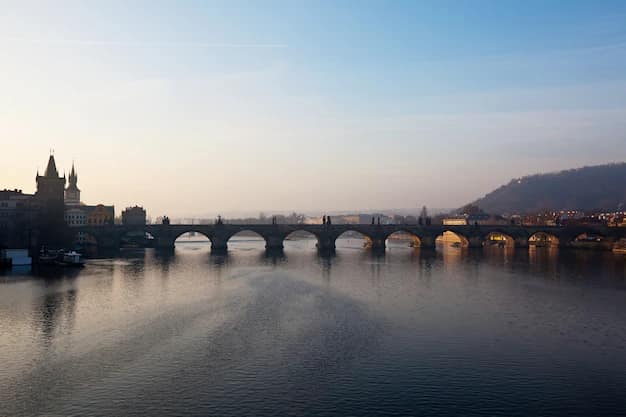
Give Prague at least three days, and four if you can, because the city rewards slow wandering more than a checklist. Start in the Old Town Square, where the medieval Astronomical Clock chimes on the hour and crowds gather to watch its little parade of apostles, then walk the length of Charles Bridge early in the morning before the tour groups arrive. Across the river, the vast Prague Castle complex and St. Vitus Cathedral can eat up half a day on their own, and the climb up Petřín Hill gives you the whole red-roofed skyline for the price of a gentle walk. Leave time for the Jewish Quarter, a river cruise at dusk and an evening in a beer hall, since Czech pilsner is genuinely part of the culture here. If this is your first time on the continent, our Europe first-timer itinerary from India frames how many days each city really needs so you do not try to cram too much in.
Budapest: thermal baths, a floodlit river and ruin bars
Budapest is really two former towns joined across the Danube, hilly Buda on one bank and flat, buzzing Pest on the other, and three days lets you enjoy both without rushing. On the Buda side, ride up to the Fisherman's Bastion and Buda Castle for the classic panorama, then cross the Chain Bridge into Pest for the soaring Parliament building, the grand cafes of Andrassy Avenue and the sombre Shoes on the Danube memorial. The city's thermal baths are the experience people remember most: the vast yellow Szechenyi complex and the art-nouveau Gellert baths let you soak in warm mineral water even when it is snowing outside. End a night in one of the famous ruin bars of the old Jewish Quarter, where courtyards of crumbling buildings have been turned into eclectic watering holes. If you would rather visit when the squares fill with mulled wine and wooden stalls, our European Christmas markets guide from India shows how magical this region turns in December.
Adding Vienna, choosing your season and the practical bits
Vienna sits almost exactly between the two, roughly four hours by train from Prague and just two and a half hours on from Budapest, so it slots into the loop with barely any detour and turns a two-city trip into an effortless three. Two days is enough for the Schonbrunn Palace, the Hofburg, a slice of Sachertorte in a grand old coffee house and a concert if you are so inclined, and our dedicated Vienna, Salzburg and Hallstatt guide from India covers the Austrian leg in depth if you want to extend it further. On timing, the sweet spots are late spring and early autumn, roughly May to June and September to October, when the weather is kind and the crowds thinner; July and August are warm and busy, while December trades cold for Christmas-market charm. Our month-by-month breakdown of the best time to visit Europe helps you pick, and if you catch the travel bug, the 15-day multi-country Europe itinerary from India shows how this trio expands into a grand tour.
Money, food and getting between the cities
Here is a detail that surprises many first-timers: although both countries are in Schengen, neither uses the euro yet, so you will spend Czech koruna in Prague and Hungarian forint in Budapest, while Vienna runs on euros. That means carrying a mix rather than assuming one currency covers everything, and our forex and money guide for international travel from India explains how to split cash and card sensibly and avoid poor airport exchange rates. Between cities, the train is the scenic and stress-free choice, while a budget flight makes sense only for the longer Prague to Budapest leg; book rail tickets a few weeks ahead for the better fares. Travel insurance is not optional here, since the Schengen visa itself requires cover of at least thirty thousand euros, and our travel insurance guide for Indian travellers covers what a compliant policy must include. Vegetarian and Jain travellers manage well too, with Indian restaurants in all three capitals and plenty of cheese, dumplings and fresh produce in between, and our roundup of Jain and vegetarian friendly destinations abroad has more ideas for eating comfortably on the road.
Frequently asked questions
Do I need separate visas for Czechia and Hungary? No. Both are Schengen members, so a single Schengen short-stay visa covers Prague, Budapest and Vienna together; you simply apply through the country where you will spend the most nights.
How do I get from Prague to Budapest? The two are about seven hours apart by direct train through beautiful countryside, or roughly a ninety-minute flight; many travellers break the journey in Vienna, which sits neatly on the route and adds barely any extra travel time.
Is it cheaper than Western Europe? Generally yes. Food, drinks, local transport and mid-range hotels in Prague and Budapest tend to cost less than in Paris, London or Switzerland, though prices vary by season and neighbourhood, so treat any figure as a guide and confirm current rates before you book.
Ready to turn this into a booked holiday? Explera Vacations plans the whole Prague, Budapest and Vienna loop from Surat, from the Schengen visa file and travel insurance to trains, hotels and vegetarian-friendly stays, so you just show up and enjoy the river views. Message us on WhatsApp or contact our travel desk, and browse our Europe tour packages from Surat for ready-made itineraries you can shape around your own dates.