Croatia is the trip that surprises almost everyone who takes it: a slim country curled along the Adriatic where honey-coloured stone cities rise straight from the sea, Roman emperors once retired, and a chain of forested lakes spills over limestone terraces in impossible shades of blue and green. For a first-time Indian traveller it is a rare combination of beach holiday, history lesson and national-park escape, all within a few hours of each other and all sharing that warm, unhurried Mediterranean rhythm. Since the start of 2023 Croatia has been a full member of the Schengen area and uses the euro, which means the same visa that opens France or Italy now covers Dubrovnik and Split too, and hopping across to a neighbour on the same trip is genuinely easy. If this is your first time on the continent, our Europe first-timer itinerary from India is a good companion read before you start pinning down dates and cities.
Dubrovnik: the walled city above the Adriatic
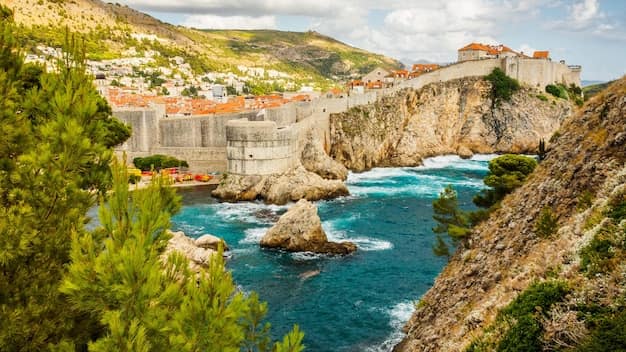
Dubrovnik is the image most people carry of Croatia, and it lives up to it. The old town is a compact maze of marble-paved lanes, baroque churches and shuttered stone houses, all wrapped in nearly two kilometres of medieval city walls that you can walk end to end high above the sea; reckon on a couple of hours for the full circuit and roughly 30 to 40 euros for the wall ticket, though you should always check the current rate before you go. Fans of Game of Thrones will recognise the ramparts and staircases as King's Landing, and a cable car up Mount Srd delivers the sweeping sunset view over the terracotta rooftops and the island-dotted water beyond. Come early or late in the day to dodge the cruise-ship crowds that pour in at midday, and consider staying a night or two inside or just outside the walls so you get the city to yourself after dark. If you love the idea of stone lanes tumbling toward blue water, you will also enjoy our Greece and Santorini travel guide from India, which shares much of the same island-hopping spirit across the Aegean.
Split and Diocletian's living Roman palace
A few hours up the coast, Split is Croatia's second city and one of the most unusual old towns in Europe, because it is built inside a Roman palace that is still very much alive. When the emperor Diocletian retired here in the fourth century he raised a vast seafront residence, and over the centuries locals simply moved in, so today cafes, apartments and shops fill the arches and courtyards while the original cellars and the columned Peristyle square still stand at its heart. Split makes a natural base for the Dalmatian coast, with a lively palm-lined seafront promenade, good day trips to the waterfalls of Krka National Park and the walled town of Trogir, and the busiest ferry port for the islands. Because the Roman thread runs straight across the water to Italy, many travellers pair Croatia with a leg in Rome or Venice, and our Italy travel guide from India shows how well the two countries fit together; those planning a wider central-European loop can also fold in our Prague and Budapest eastern Europe itinerary.
Plitvice Lakes and Croatia's waterfall country
Inland from the coast lies the sight that many travellers end up loving most: Plitvice Lakes National Park, a UNESCO-listed cascade of sixteen terraced lakes linked by tumbling waterfalls, threaded together by wooden boardwalks that let you walk right across the turquoise water. The colours shift from emerald to deep blue depending on the light and the minerals in the limestone, and a network of trails and a small electric boat let you tailor a half-day or full-day visit. Entry prices vary sharply by season, running from cheaper in the winter months to noticeably higher in peak summer, so check the official park website for current tickets and book a timed slot ahead in July and August. Spring and autumn are the sweet spot here, with fuller waterfalls or golden foliage and far thinner crowds, and to line up the wider calendar our month-by-month guide to the best time to visit Europe is worth a look; if you are stitching Croatia into a longer journey, borrow the pacing from our 15-day multi-country Europe itinerary.
Schengen visa, getting there, money and vegetarian food
Croatia's coastline also unspools into more than a thousand islands, and from Split ferries and fast catamarans reach glamorous Hvar, the vineyard-and-old-town charm of Korcula and the blue-cave day trips around Vis, so a comfortable first visit runs about eight to ten days with time for two nights in Dubrovnik, three or four around Split and the Dalmatian islands, and a Plitvice stop on the drive to Zagreb; those with more time often add the beaches and old towns of our Portugal travel guide from India. Croatia now sits inside the Schengen area, so Indian passport holders need a Schengen short-stay visa, and applying through the Croatian mission is a sound route when Croatia is your main destination; our Schengen visa guide from Gujarat walks through the paperwork, and if you are weighing which consulate to lodge with, our note on the best Schengen country to apply from Gujarat is worth reading before you begin your Schengen application. There are no direct flights from India, so most travellers connect once through a hub such as Istanbul, Dubai, Doha, Frankfurt or Vienna into Zagreb, Split or Dubrovnik, and fares ease up in shoulder season. Croatia uses the euro, cards are widely accepted, and it helps to carry some cash for small coastal towns and ferry snacks, so plan your currency with our forex and money guide for international travel and never skip cover, which our travel insurance guide for Indian travellers explains is mandatory for a Schengen visa anyway. Vegetarians and Jain travellers manage reasonably well, with grilled vegetables, fresh salads, cheese, pasta and pizza everywhere along the coast, though it is always worth asking whether soups or risottos are made with a meat or fish stock.
Frequently asked questions
Do Indians need a visa for Croatia? Yes. Since Croatia joined the Schengen area, an Indian passport holder needs a Schengen short-stay visa, which you can prepare for with our Schengen visa guide from Gujarat and lodge through the Croatian mission.
When is the best time to visit Croatia? Late spring, roughly May and June, and September are the sweet spots, with warm sea, open ferries and thinner crowds, while July and August are hottest and busiest and the deep winter is quiet but cooler on the coast.
How many days do I need for Dubrovnik, Split and Plitvice? About eight to ten days lets you enjoy all three without rushing, giving two nights to Dubrovnik, three or four to Split and the islands, and a stop at Plitvice on the road between the coast and Zagreb.
Ready to turn this into a booked holiday? Explera Vacations plans the whole Croatian route from Surat, from your Schengen visa file and one-stop flights to island ferries, timed Plitvice tickets and vegetarian-friendly hotels, so you only have to pack. Message us on WhatsApp or contact our travel desk to get started, and browse our tour packages from Surat for ready-made itineraries you can shape to your own dates.