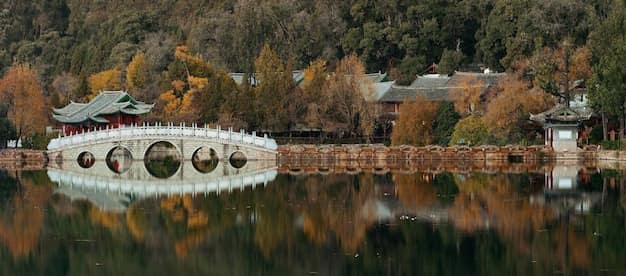
Most first-time trips to China are drawn to the big three — Beijing, Xi'an, Shanghai. Lijiang belongs to a different China altogether. It sits in the far south-west, in Yunnan province, where the Himalaya begins to fold down into Southeast Asia: timber-and-stone lanes threaded with water channels, tiled roofs the colour of wet earth, and, on a clear morning, the white blade of Jade Dragon Snow Mountain standing over the whole valley. For travellers from Surat and Gujarat who have already done the classic circuits and want something slower, greener and genuinely unfamiliar, this corner of China is one of the most rewarding trips we plan. It is also one that needs honest preparation — on the visa, on altitude, and on how everyday life works there.
Why Yunnan is China's most culturally distinct corner
Yunnan borders Myanmar, Laos and Vietnam and holds more recognised ethnic minority groups than any other Chinese province. Around Lijiang the dominant community is the Naxi, with Bai communities near Dali to the south and Tibetan communities to the north around Shangri-La. That mix shows up in everything — the shape of the courtyard houses, the food, the music, the script on old temple doors. If your image of China is skyscrapers and high-speed rail, Yunnan will quietly rearrange it. Many of our travellers pair it with the karst rivers and bamboo-raft country of the south-east, and if that appeals, our Guilin and Yangshuo travel guide for Indian visitors covers that half of the country. The two regions together make a superb two-week first visit, and they feel nothing alike.
Getting there from India, and the visa you must start with
There are no direct flights from Gujarat to Lijiang, and you should plan for two changes. The usual shape is Surat or Ahmedabad to Mumbai or Delhi, then a Southeast Asian hub — Bangkok, Singapore, Kuala Lumpur or Hong Kong — onward to Kunming, Yunnan's capital, and finally a short domestic hop of roughly an hour to Lijiang Sanyi Airport, or a comfortable high-speed train from Kunming that takes several hours. Expect a long first day and build a buffer night in the hub or in Kunming rather than gambling on a tight connection; our flight desk in Surat can hold the domestic Chinese leg until the international ticket is confirmed. On the paperwork, be clear-eyed: Indian passport holders need a Chinese visa arranged in advance — there is no visa-free entry for us. That means an appointment at the visa centre, a completed application, supporting documents such as confirmed flights, hotel bookings and financial proof, and biometrics in person, so begin six to eight weeks ahead. Requirements and appointment availability change without much notice, so read our China visa requirements for Indian passport holders page and verify current rates and entry rules before you book anything non-refundable. If the category itself is confusing, our explainer on tourist, business and transit visa types sorts it out, and the team at our visa documentation office in Surat handles the file end to end.
Going high: altitude, the gorge and the road to Shangri-La
This is the part of the trip that deserves the most respect. Lijiang itself sits at roughly 2,400 metres — high enough that some visitors feel breathless, headachy or sleepless on the first night. Shangri-La is considerably higher, and the glacier park on Jade Dragon Snow Mountain takes you by cable car to viewing decks above 4,000 metres, which is serious altitude by any measure. The sensible approach is to give Lijiang two nights before you go higher, walk slowly, drink plenty of water, go easy on alcohol for the first days, and treat symptoms that worsen — persistent headache, vomiting, confusion, breathlessness at rest — as a reason to descend rather than push on. If you have a heart or lung condition, are pregnant, or take regular medication, speak to your doctor before booking, and ask specifically about the glacier park and Shangri-La rather than the trip in general; we are travel agents, not physicians, and altitude is one place where that distinction matters. Make sure your policy actually covers you up there too — our travel insurance guide for high-altitude and adventure trips explains the exclusions people discover too late.
Two hours north of Lijiang, the Yangtze squeezes through Tiger Leaping Gorge, one of the deepest river canyons anywhere. You can do it three ways. The easy version is a day trip to the viewing platforms above the rapids — a few hundred steps, dramatic, and manageable for most fit travellers. The middle option is walking a section of the High Trail between guesthouses, a half-day of undulating path with big views and no technical difficulty. The full version is the classic two-day High Trail trek, including the switchbacks known as the Twenty-Eight Bends, which is genuinely strenuous at altitude and best attempted with a guide and a night in a trail guesthouse. Beyond the gorge the road climbs onto the Tibetan plateau to Shangri-La, with its restored old town, the large Songzanlin monastery and grassland light that feels a world away from the valley — a worthwhile two-night extension if your itinerary and your body allow it.
The Old Town, honestly — and the villages that are the antidote
Lijiang Old Town is a UNESCO World Heritage site and it earns the listing: a maze of cobbled lanes with no city wall, canals fed by mountain water running beside the paths, and wooden buildings stepping up the slope towards Lion Hill. It is also, by the middle of the day, extremely commercialised and extremely crowded — tour groups with flags, souvenir shops selling the same drums and scarves, bars that get loud after dark. Do not let that put you off; just time it properly. Walk the lanes between six and nine in the morning, when shopkeepers are sweeping and the canals are the only sound, and again late at night once the day crowds have gone. Then spend your daylight hours elsewhere. Shuhe, twenty minutes away, is an older Tea Horse Road settlement with the same architecture at a quarter of the intensity. Baisha, further out under the mountain, is quieter still — a working village with famous 15th-century murals, a few embroidery workshops and farmers in the fields behind the lanes. Most travellers who love Lijiang love it because someone told them to sleep in the Old Town but spend their days in Shuhe and Baisha; we can arrange guesthouse stays in the old quarters either way.
A word on the Naxi. Their culture is not a stage act laid on for visitors — it is a living minority culture with its own language, matrilineal traditions in some communities, and Dongba, the only pictographic script still in use anywhere in the world, whose characters look like small drawings of what they mean. You will see Dongba on shop signs and souvenirs, much of it decorative; you will also find it taken seriously at the Dongba research institute and the museum by Black Dragon Pool, which is worth an unhurried hour with a good guide. The Naxi orchestra concerts in town are real music with real elderly musicians, though the presentation is squarely aimed at tourists. Go with curiosity rather than a camera-first attitude, ask before photographing people, and dress modestly in temples and monasteries — the same courtesy we would want from a visitor to our own places.
Practical China notes: payments, apps and eating well
China works differently from anywhere else you have travelled, and this is where trips go wrong. Many familiar apps and websites — including several messaging, mapping and email services Indians use daily — are not accessible on local networks, and international cards are often not accepted at small shops, taxis and family restaurants. Daily life runs on mobile payment via QR code, which foreign visitors can now generally set up by linking an international card inside the local payment apps, though the process changes periodically and works best when you configure it before departure. Carry some cash as a backup, download offline maps and a translation app before you fly, and let us walk you through the app setup as part of pre-departure briefing rather than discovering it at a noodle counter in Kunming. Keep an eye on our travel advisory updates for Indian travellers in the weeks before you go. On food: Yunnan is a delight — mushrooms, rice noodles, gentler spicing than Sichuan — but vegetarian and Jain travellers need advance planning, because meat stock, lard and garlic or onion are default rather than exceptional. We brief guides and hotels in writing beforehand, note a few reliable vegetarian and Buddhist-run restaurants in Lijiang and Shangri-La, and most Gujarati families still travel with theplas, khakhra and a packet of masala for the first days.
Budgets and a 6-7 day itinerary
As a planning range only, a well-organised week in Yunnan from Surat tends to land around ₹1,10,000 to ₹1,75,000 per person on a twin-sharing basis, covering international and domestic flights, comfortable Old Town or boutique guesthouse stays, private transfers, guiding and most meals. Backpacker-style travel with trains and dormitories can come in well below that; a Shangri-La extension with premium hotels and the glacier park cable car pushes above it. Visa fees, insurance and entry tickets sit outside that figure and move often, so treat every number here as indicative and verify current rates and entry rules at the time of booking. A comfortable shape for the week: day one, arrive Kunming and rest; day two, fly or train to Lijiang, settle in and walk the Old Town at dusk; day three, Black Dragon Pool in the morning and Baisha village in the afternoon, keeping the pace slow while you acclimatise; day four, Jade Dragon Snow Mountain and the glacier park, back early; day five, Tiger Leaping Gorge at whichever grade suits you; day six, Shuhe village and a free morning, or continue to Shangri-La for two nights; day seven, return to Kunming for the flight home. If you would rather have the whole thing built around your dates, our Yunnan and China tour packages from Surat start from exactly this skeleton.
Frequently asked questions
Do Indian passport holders need a visa for China? Yes. A Chinese visa must be obtained before travel, with an appointment, a documented application and biometrics in person — there is no visa-free arrangement for Indian passports, whatever you may read on social media. Start six to eight weeks ahead and confirm the current requirement directly, since rules and appointment slots shift. If you are curious about how the passport is faring elsewhere, our piece on what changed on the Indian passport visa-free map has the wider picture.
When is the best time to visit Lijiang? March to May and September to November are the sweet spots — clear skies, comfortable days, cold nights. Summer brings the monsoon and cloud that can hide the snow mountain for days. Winter is crisp, beautiful and genuinely cold, especially in Shangri-La. Avoid the Chinese public holiday weeks in early May and early October, when domestic crowds fill the Old Town completely.
Is Lijiang suitable for older parents or young children? Often yes, with care. The Old Town's cobbles and steps are hard on weak knees and impossible with a stroller, and the altitude affects everyone differently. Families travelling with elders usually do well staying in Shuhe, skipping the glacier park's highest deck, and choosing the viewing-platform version of Tiger Leaping Gorge instead of the trek. Anyone with a heart or lung condition should clear the trip with their doctor first.
Lijiang rewards travellers who plan properly and then slow down once they arrive — the visa filed early, the altitude respected, the Old Town walked at the right hour. If that sounds like your kind of trip, talk to our Surat travel team about dates and we will map the flights, the paperwork and the mountain days around your family's pace.